
Table of Contents
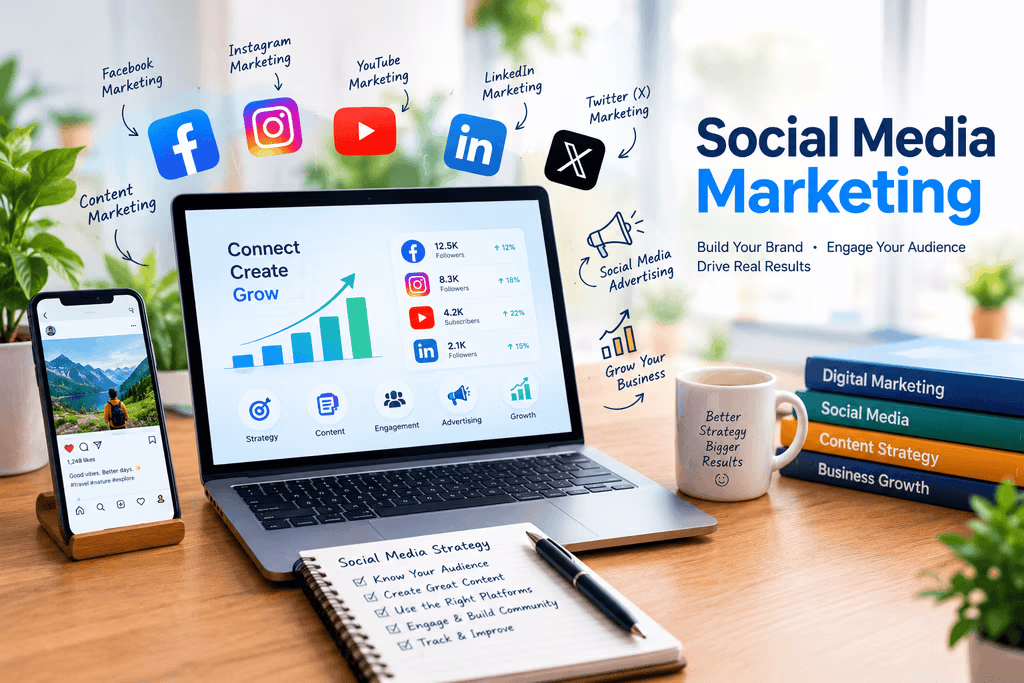
Social Media Marketing has become an important part of modern digital marketing. Businesses of all sizes use platforms such as Facebook, Instagram, YouTube, LinkedIn, and X to connect with customers, promote products, build brand awareness, and generate leads.
Whether you are a small business owner, freelancer, startup, or established company, having a clear social media marketing strategy can help you communicate with your target audience and build a stronger online presence.
What Is Social Media Marketing?
Social media marketing is the process of using social media platforms to promote a business, product, service, or personal brand. It can include organic content, social media posts, community management, influencer marketing, and paid advertising.
Unlike traditional marketing, social media allows businesses to communicate directly with their audience and receive feedback through comments, messages, reactions, and other forms of engagement.
Why Is Social Media Marketing Important?
A strong social media presence can support several business objectives, including:
- Increasing brand awareness
- Building customer relationships
- Generating leads
- Driving website traffic
- Promoting products and services
- Increasing audience engagement
- Supporting sales and conversions
Social media can also complement other areas of digital marketing, including SEO, email marketing, content marketing, and online advertising.

Major Social Media Marketing Platforms
Different platforms attract different audiences and offer different marketing opportunities.
Facebook Marketing
Facebook marketing can be used for organic content, community building, customer communication, and paid social media advertising. Facebook Pages and Groups can also help businesses develop an active community.
Instagram Marketing
Instagram is highly visual and works well for brands that can communicate through images, Reels, Stories, and short-form video. Instagram marketing can support brand awareness, engagement, product discovery, and customer interaction.
YouTube Marketing
YouTube marketing focuses on video content, educational tutorials, product demonstrations, reviews, and other long-form or short-form videos. Consistent and useful content can help businesses develop an audience over time.
LinkedIn Marketing
LinkedIn is particularly useful for B2B businesses, professionals, recruiters, consultants, and technology companies. Businesses can use LinkedIn to share industry knowledge, company updates, professional content, and thought leadership.
Social Media Marketing Strategy
A successful social media marketing strategy starts with clearly defined objectives. Instead of simply posting content, businesses should understand what they want to achieve.
A basic strategy can include:
- Define your target audience – Understand their interests, needs, and online behavior.
- Set measurable goals – Determine whether your objective is awareness, engagement, traffic, leads, or sales.
- Choose the right platforms – Focus on channels where your target audience is active.
- Create valuable content – Publish educational, informative, entertaining, and promotional content.
- Maintain consistency – Follow a practical content calendar.
- Analyze performance – Review reach, engagement, clicks, leads, and conversions.
- Optimize continuously – Improve your strategy based on performance data.
Social Media Management
Social media management involves planning, creating, publishing, monitoring, and analyzing social media content.
A professional social media manager may handle:
- Content planning
- Social media posts
- Caption writing
- Hashtag research
- Community management
- Customer responses
- Content scheduling
- Performance reporting
- Audience engagement
Businesses can manage these activities internally or work with a social media marketing agency or freelancer.
Social Media Marketing Services
Professional social media marketing services can include both organic and paid marketing activities.
Common services include:
- Facebook marketing
- Instagram marketing
- Social media management
- Social media advertising
- Content marketing
- Influencer marketing
- Audience research
- Lead generation
- Social media analytics
- Content strategy
- Campaign management
The exact service mix should depend on the business goals, target audience, industry, and available resources.
Organic Marketing vs Social Media Advertising
Organic social media marketing focuses on unpaid activities such as regular posts, Reels, educational content, community engagement, and audience interaction.
Social media advertising, on the other hand, uses paid campaigns to reach selected audiences. Businesses can use paid advertising to promote products, generate leads, increase website traffic, or support conversions.
A combination of organic content and paid advertising can create a broader social media marketing plan.
Content Marketing and Social Media
Content is at the center of effective social media marketing. Businesses can create different types of content depending on their audience and platform.
Examples include:
- Educational posts
- Short videos
- Product demonstrations
- Customer stories
- Industry tips
- Infographics
- Behind-the-scenes content
- Frequently asked questions
- Promotional offers
The goal should be to provide useful information while maintaining a consistent brand identity.
Influencer Marketing
Influencer marketing involves collaborating with creators who have an audience relevant to a particular brand or product.
Before working with an influencer, businesses should consider audience relevance, engagement quality, content style, previous collaborations, and campaign objectives.
Influencer marketing can be particularly useful for product discovery and brand awareness when the creator’s audience matches the target market.
Social Media Marketing Tools
Businesses can use different social media marketing tools to organize and measure their activities.
Useful tool categories include:
- Content scheduling tools
- Analytics platforms
- Design tools
- Social listening tools
- Advertising platforms
- Customer communication tools
- SEO and keyword research tools
The right tools can reduce repetitive work and make campaign management more organized.
Social Media Marketing Tips
Here are some practical social media marketing tips for beginners:
- Know your audience before creating content.
- Use high-quality and relevant visuals.
- Keep your brand identity consistent.
- Create content that provides genuine value.
- Respond to comments and messages.
- Test different content formats.
- Track important performance metrics.
- Avoid excessive promotional posts.
- Use relevant keywords naturally.
- Review your strategy regularly.
Conclusion
Social Media Marketing is an important component of modern digital marketing. From Facebook marketing and Instagram marketing to YouTube, LinkedIn, content marketing, influencer marketing, and social media advertising, businesses have many opportunities to connect with their target audience.
The key is not simply to be present on every platform. Instead, develop a clear social media marketing plan, understand your audience, publish valuable content, engage with customers, and use performance data to improve your approach.
With consistent social media management, quality content, and a well-planned strategy, businesses can build a stronger online presence and create meaningful relationships with their audience.